CUSTOMER LOGIN      REGISTER
CROP NEWS & REPORTS
Tim_ian

February came and went in a flash. As predicted, it was another wet month. We didn’t receive the same volume of water as in January, but we had 10 rain events that totaled around 3.5 inches. The rain prevented us from doing groundwork in most fields with the exception of Organic Broccoli, which we harvested.

We attended the farm show in Tulare last month and returned with new ideas for our spray tractor. Additionally, we have been busy in the shop repairing and maintaining the tractors, trucks and forklifts. We are also fabricating new equipment that will be put to use for the first time in the 2010 season. We are anxious to test this new equipment and hope that our efforts will prove worthwhile!

This is the time of year when we start to feel as excited as we are nervous about the upcoming growing season. We are all excited about finally being able to work. The fresh smell of the soil being turned over for the first time has an addictive aroma that I can’t resist. It propels us to be able to work those 15-hour days required to get the ground ready. The nervousness sets in because we are all hoping that we properly prepared for the spring rush. Hitting all the exact planting dates for all of the various crops we grow can be challenging, but we do whatever it takes to get the job done.

As always, if you have any questions about this year’s growing season, please select the e-mail link below. –Ian Teresi

We are almost ready to transplant our Pepper plants from the greenhouses to the fields. We still need to get in the fields to turn under some volunteer hay, but it looks like we are going to have to wait a little longer; March has some significant amounts of rain forecasted. In the meantime, we are preparing to plant some hedgerows and beneficial habitats for the “good bugs” to live. We are currently surveying some fields that could benefit from hedgerows. We plant hedgerows for many reasons, best explained on the CAFF (Community Alliance with Family Farmers) website at www.caff.org.

We are currently working with a seed specialist to perform breeding trials on a few new varieties of Squash. We are exploring different varieties as well as different production practices in an effort to increase our yields from years past.

I have designed a seed spacing trial. Although we had an abundant bean harvest last year, one thing we noticed was that the plants would lodge quickly. Lodging (plant falling down) is a function of a few things, one being spacing. For that reason, we will be planting some trials with six different spacing increments. If the increased space helps with the lodging and doesn’t affect the yield, we could significantly reduce the amount of seeds required.

We will be applying compost to some of the organic Bean fields if March is dry. Otherwise we will have to wait until after the first crop is harvested to get the compost on.

Despite the rains, we were able to get into the Garlic fields last month to perform some weeding and light cultivation. The Organic Garlic remains a bit weedy, but last month’s cultivations and the hand weeding proved very helpful. Both our Conventional and Organic Garlic germinated nicely and are growing well.

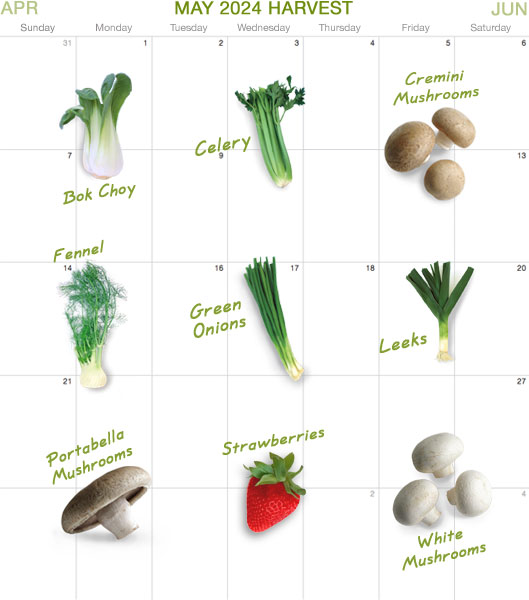
Calendar_mar10

We successfully harvested the first picking of our Organic Broccoli. The Broccoli was beautiful. The beneficial insects that we continuously released did the job keeping the aphids away. The next picking is ready to go.

Organic Leeks are coming along just fine. Leeks take their sweet time growing. They grow at a sloth’s pace until they reach a certain point, and then they take off very quickly; so quickly, in fact, that we are always on the watch to ensure they do not become over-mature (bolt) before they are all harvested. For another 4 weeks or so, we will be keeping a close eye on the moisture levels and temperatures to ensure they do not bolt!

I have been treating the Strawberries with kid gloves. We have been continuing the spoon feeding, and have successfully pushed blossoms only to watch the rain beat down on them! The crown (base of the plant where the fruit comes from) production is coming along well. At first glance, it looks like the best crown set to date. The trick now is to keep the plants dry. Every time a blossom gets rained on, it pollinates incorrectly, and the fruit shrivels a.k.a. “catfacing.” Therefore, we are doing our best to keep the strawberries dry. And, it looks like we will be picking our first boxes of Strawberries in about three weeks.

Report